

Carol Williams-Nickelson, PsyD
While gardening has long been valued as a peaceful hobby, recent research has moved gardening from the "leisure" category into a legitimate mental health clinical intervention. Organizations ranging from Texas A&M University (2024) to PubMed-indexed meta-analyses (2025) have highlighted that nature-based activities are an effective, science-backed form of therapy for mental well-being. Whether you’re tending to an expansive backyard or a few herbs on a windowsill, here’s how the act of growing plants reshapes your brain and body:
1. The "Soil-Serotonin" Connection
One of the most fascinating biological links between gardening and happiness lies in the dirt itself. Research reaffirmed by the IDEP Foundation (2024) shows that Mycobacterium Vaccae, a harmless bacterium found in soil, triggers the release of serotonin in the brain. (Serotonin is the "feel-good" chemical that helps regulate mood and anxiety.) This microbe stimulates cytokine production, mimicking the effects of antidepressant medications like Prozac. In essence, the soil acts as a natural antidepressant, activating the release of happiness chemicals every time you repot a plant or pull a weed. Simply handling healthy soil with bare hands provides an accessible, natural way to improve your mood and reduce stress.
2. Decreasing Cortisol Levels
Gardening Gardening is a proven stress-buster. Multiple studies, including recent clinical reviews of Social and Therapeutic Horticulture (STH) and research from the Emory Healthy Aging Study (2025), show that as little as 20 to 30 minutes of gardening significantly lowers levels of cortisol, the body's primary stress hormone. This results in a shift from the "fight or flight" sympathetic nervous system to the "rest and digest" parasympathetic state, leading to improved heart rate variability and an immediate sense of calm.
3. Combatting Attention Fatigue
In a world of constant digital pings and general digital burnout, our "directed attention" (the focus used for work and screens) becomes exhausted. According to Attention Restoration Theory (ART)—a concept extensively explored in research by Plant Plan (2025)—gardening utilizes "soft fascination." Watching a leaf unfurl, a bee or butterfly land on a flower, and buds boom effortlessly captures your interest. This allows the brain’s cognitive filters to rest, reducing mental fatigue and improving focus once you return to daily activities. In fact, a 2025 Texas A&M College of Architecture report found that students with views of greenery or access to gardens recovered from mental fatigue faster and performed significantly better on attention-based tasks.
4. Building Academic and Emotional Resilience
Gardening Gardening is now being used to help students and community members navigate high-pressure environments. The 2024 National College Health Assessment Report (NCHAR) noted that 30% of students experience unhealthy levels of academic-related anxiety. A 2025 study with university students found that engaging in therapeutic horticulture significantly increased academic resilience and overall perseverance. Gardening teaches unique psychological lessons. According to the NCHAR, "Plants don’t always grow as planned. Dealing with a wilted seedling or a surprise frost helps gardeners practice patience and problem-solving, which translates into better emotional regulation in high-stress environments." Further, a 2025 Rutgers University (NJAES) study on community gardens found that the "goal-setting and harvest" cycle of gardening fosters emotional resilience. It teaches patience and the "tolerance of imperfection," which helps individuals manage stress in other areas of life.
5. Neuroplasticity and Brain Health
Gardening isn't just a mood booster; it’s a workout for the brain. Recent neuroscience reviews, including a 2025 Multidisciplinary Digital Publishing Institute (MDPI) report on the Brain-Derived Neurotrophic Factor (BDNF) Interactive Model, show that the combination of engaging in the planning, digging, and sensory tracking of a garden with the physical activity and cognitive stimulation involved, increases BDNF. This protein supports neuroplasticity—the brain's ability to grow new connections—which is vital for memory and protecting against cognitive decline and dementia.
You don’t need a green thumb to experience the mental health benefits of gardening, such as lower anxiety, mood elevation, improved focus and clarity, and higher self-esteem. These improvements come from the process of nurturing, not the perfection of the result. Even 20 minutes of caring for a plant can be a powerful tool for your well-being. Tending to a garden—no matter how small—is a scientifically validated path to a more resilient mind. So go to the nursery, buy some plants, spend time in your garden, and know that this investment in your hobby can bolster your overall mental health.
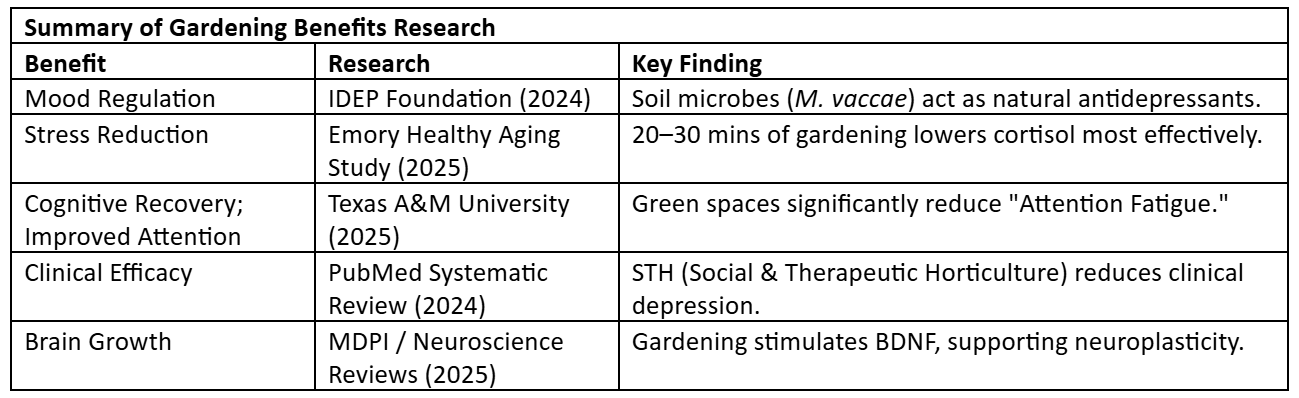
Summary of Gardening Benefits Research, Clarity Psychological, 2026
Download or share this “Getting Your Hands Dirty” document (PDF).
Talk to someone who can help at Clarity Psychological Services.
Not sure where to start? Schedule a free 15 minute initial consultation with a Clarity Psychologist.
