
Our Groups
Group Therapy and Programs
About Group Therapy
Group therapy most often occurs in person, usually weekly. An intake session is conducted to determine your needs and if group therapy and the membership composition of a particular group will be a good match for you.
Group therapy may be the primary service you receive at Clarity, or it may be used as an adjunct to individual therapy, medication management, or other services.
Groups may be time-limited, open, or closed. Click the links on the right (or scroll down) for more detailed information about the different formats and topics for group therapy.
Group therapy sessions last between 55 - 75 minutes, depending on the age and total number of group members.

The Purpose of Group Therapy
Behavior is learned through observation, trial-and-error, and personal interactions. Because behaviors are shaped through direct experience, in-the-moment opportunities are important to understand, practice, develop, and generalize new skills.
Knowing why we act and feel the way we do helps us understand ourselves better, but it is often insufficient to produce the behavioral changes needed to be successful at school, at home, and in life. We need opportunities to learn and practice coping skills and behavioral strategies in real life situations, within a positive, empowering, enjoyable, and safe environment.
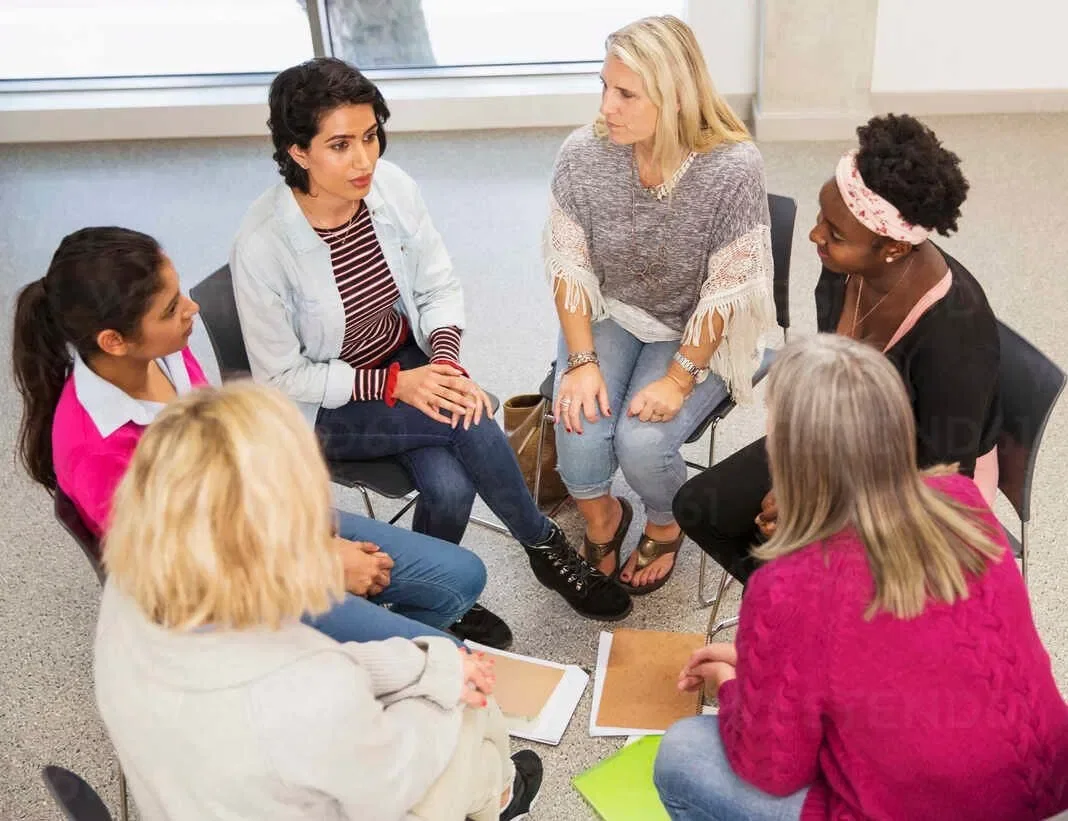
What to Expect in Group Therapy
Therapy groups provide psychoeducational information, in-vivo experiences, and processing opportunities. Group members are supported by active coaching, affirmation, and inclusive practices that foster personal insight, growth, and lasting behavior change.
A skills-based approach is used to encourage and enhance self-regulation abilities, teach coping skills, expand positive behaviors, manage emotions more effectively, improve confidence, build self-esteem, and increase success. Many clients participate in both individual and group therapy, though this is not required.

Groups for Different Ages, Themes, and Skills
Group Therapy Intake Process
An intake session to participate in group therapy is required for clients who have not already completed an intake specifically for a group. Membership composition is a key factor to help foster a cohesive group dynamic for everyone involved.
The group intake session is used to begin building a therapeutic relationship, determine the client's interactional style and needs, and confirm that the group is an appropriate fit. The composition of the group is important for the success of the group and every member's experience. Therefore, members are chosen carefully to create the best environment for all members to benefit and feel connected.

Child and Adolescent Social Skills Group
Social Skills: Developing Attitudes and Behaviors that Foster and Sustain Positive Relationships
This group helps members develop social skills to support better relationships, and to be more cooperative and adaptable at home, in school, and in the community.
The focus of this group is on developing, practicing and receiving coaching in the following skill areas: social awareness, building and sustaining friendships, problem solving, emotional regulation, conflict resolution, manners, perspective taking, empathy, avoiding the traps of social media, communication/expression, body language, bullying and self-advocacy.
Members will expand their abilities to maintain appropriate control, develop emotional awareness, foster meaningful friendships, become more accountable, and purposefully manage their lives and choices.

Adolescent Executive Functioning Group
Executive Functioning: Growing the Capacity to be Organized, Responsible, and On Track
This group focuses on filling the gaps and supporting the development of executive functioning skills including the ability to plan, prioritize, persist, focus, control emotions, manage time, and be organized and flexible.
The adolescent brain develops in stages which can make it difficult to accept, manage and comply with some expectations in the school environment or fulfilling responsibilities at home.
This group focuses on developing useful, individualized tools to help with prioritizing, becoming and staying organized for task completion, demonstrating higher levels of responsibility/accountability, avoiding the traps of “forgetfulness” as working memory develops, staying on top of schedules, balancing homework and extracurricular activities, avoiding last-minute planning crises, and finding and maintaining motivation.
These skills gradually evolve into the young adult years, but specific skills can be fostered when there are delays or deficits in certain executive functions.

Adolescent Girls Group
Teen Girls: Managing Anxiety and Depression
Today’s youth have more pressures than ever before. Many believe they must exceed performance standards in nearly every aspect of their lives. Increasingly higher expectations can result in stress, anxiety, fear of failure, perfectionism, and depression.
Feeling as if one is never good enough, can always do better, and can rarely, if ever, make a mistake or receive less than an outstanding evaluation in any aspect of life is unhealthy and can have significant, debilitating consequences.
This is a particularly vulnerable time for girls. Some girls may become immobilized by worry, a sense of defeat, rejection, isolation, loneliness, anger about uncontrollable circumstances, and uncertainty about their future.
This group focuses on helping members understand their unique triggers, how to care for themselves and others, and develop new coping skills to face and overcome these challenges.

Teen Talk Group
Teen Talk: Developing Tools to Successfully Manage Stress, Anxiety, Emotions, Friends, School, and Daily Life
Teens deal with a lot. Balancing schoolwork, sports, activities, jobs and relationships all while hearing messages about what to think, say, wear, and do can feel overwhelming, confusing, and create emotional vulnerabilities.
This group helps older teens identify and unpack the assumptions and messages received to find their own voice and make choices that will help them advance their goals while staying true and kind to themselves.
Big transitions and decisions about life after high school, college, jobs, careers, intimate relationships and even core beliefs and values are emerging daily.
This is an unusual, vulnerable time. Navigating the teenage years is hard enough, but it has become even more difficult with the uncertainty of the world and with significant changes in how schools are operating.
Socializing for many teens has completely stopped, radically changed, and might primarily consist of text messaging, social media posts, or engaging in chats while playing video games. There might be an occasional in-person meet-up with a subset of friends. But life and the issues adolescents normally face as part of this developmental right of passage have not changed - they are just experienced differently and often with more challenges. Kids are still struggling with stress, anxiety, depression, self-esteem, confidence, executive functioning, relationships, identity, school, and more.
It is important, now more than ever, that kids have an outlet – a place where they belong, where they can talk about the issues that are affecting them, where they are accepted for who they are, and where they can learn and practice coping skills to get them through the tough times, and fully enjoy the good times. Our teen talk groups provide a safe refuge for youth.

Adolescent Confidence and Self-Esteem Group
Building Confidence and Improving Self-Esteem
Promoting healthy self-esteem is emphasized in this group to help members feel positive regard for themselves, accept weaknesses, celebrate strengths, and believe they are as valuable and important as others.
Today’s youth often struggle with feeling confident, capable, worthy and thus able to assert themselves, and embrace their evolving identity. Powerful social messages fuel self-talk that often results in adolescents comparing themselves to others and feeling that they do not measure up to expectations. This group focuses on empowering and internalizing a positive, strong sense of self.

Child and Adolescent Self-Regulation Group
Emotional and Behavioral Regulation Skills
Self-regulation skills are necessary life skills. A group for children and another for teens helps kids learn to exercise control, develop emotional awareness, foster meaningful friendships, become more accountable, and be more mindful and in charge of their choices.
The ability to self-regulate directly impacts a child and adolescent’s emotions, ability to focus, socialization, behavior, and self-concept. When kids feel out of control, they have a harder time paying attention, meeting their responsibilities, and engaging in self-care. They also devalue themselves, disengage with peers and family, and experience increased anxiety and depression, which can all lead to social isolation and loneliness. In response, unhealthy habits often emerge and worsen without direct interventions to help kids develop emotional literacy and self-control.

Tween and Teen Identity Development Group
Becoming Who You Are: Exploring Gender, Sexual and Identity Development
Promoting healthy self-esteem is emphasized in this group to help members feel positive regard for themselves, accept weaknesses, celebrate strengths, and believe they are as valuable and important as others.
Today’s youth often struggle with feeling confident, capable, worthy and able to assert themselves, and embrace their evolving identity. Powerful social messages can fuel a lack of acceptance or identity rejection, and self-talk often results in adolescents comparing themselves to others and feeling that they do not measure up. This group focuses on empowering and embracing a positive, strong sense of self, which includes all aspects of one’s identity.

Adolescent Friendship Group
Mastering Friendship: Overcoming Loneliness by Creating Strong, Lasting, Give-and-Take Relationships
Some kids lack friends and don't have a stable peer group. This therapy group helps participants determine why they feel so secluded and how to overcome their experiences by building the skills to find, maintain, and grow healthy relationships with peers.
Everyone needs friends, but many adolescents struggle to make strong connections with peers -- especially in these unprecedented times. They feel lonely, disconnected, unseen, and isolated. They are sad, heartbroken, and they feel stuck, as though there is no clear way out of their situation.
Even though loneliness impacts many youth at different times, for some, it can continue long enough to fundamentally change the way they interact with others. When you are lonely, you approach friendships differently and new relationships often do not have a chance to develop to their full potential, causing a vicious cycle of isolation, withdrawal, and a range of other concerns.
This group gives members the chance to process their experiences and develop the skills needed to find the relationships they need and deserve.

Child and Adolescent ADHD Group
Managing ADHD: Improving Focus, Attention, and Distracting Behaviors
Understanding ADHD and the common behaviors associated with ADHD creates opportunities for greater self control. This group helps participants identify their ADHD triggers and halt behavioral accelerations.
The six clusters of ADHD symptom management are covered in this group, and they include:
Organizing, prioritizing and activating for tasks;
Focusing, sustaining and shifting attention,
Regulating alertness, sustaining effort and processing speed;
Managing frustration and modulating emotions;
Utilizing working memory and accessing recall abilities; and
Self-monitoring and regulating behavior.
ADHD brains are wired differently. Because of neuroplasticity, we know that we can rewire our brains to gain new skills and strengthen response inhibition, delay gratification, and exert the kind of control needed to productively engage in different environments.

College Group
Transitioning and Succeeding in College: Keeping It Together while Adapting to New Demands
Navigating the college years is an exciting right of passage filled with emotional ups and downs, and big expectations. It has become increasingly difficult to figure out how to navigate college experience post-pandemic and with the changes in how colleges operate.
In this unusual, vulnerable time, navigating the college years is more challenging than ever. Many students are finding that their college experience is not what they imagined and hoped it would be. Long anticipated events have been restructured or eliminated, and having the college experience students had imagined for years, may not be what is currently available. In addition, college students are still struggling with stress, anxiety, depression, self-esteem, confidence, executive functioning, relationships, identity, new academic demands, and more.
College students need a place where they can sort through these issues and re-imagine their college experience in a healthy way. They need a place where they are accepted for who they are, and where they can learn and practice coping skills to get them through the disappointments, embrace and tackle the unknown, and enjoy the good times. This group provides a safe space for young adults navigating this stage of life.

Women’s Group
Supporting Women Navigating Career and Life
Women are rising in executive leadership ranks, but some of the longstanding issues of isolation, imposter syndrome, and trying to balance career and a home or social life still exist. This group provides women with much-needed support and mentorship.
There are many benefits for women who support and mentor other women, such as higher-level first jobs, greater perceived career experiences, and better preparation for work. The literature shows that connections with other professional women leads to more productive careers, faster attainment of professional credentials, higher performance evaluations, more frequent success in earning promotions, and greater access to leadership opportunities.
Being a successful professional woman can be lonely, and many women in executive leadership roles are wary of potential consequences of showing any vulnerabilities or doubts. This group provides a confidential space for professional women to connect and discuss the realities of being both a fallible human and a talented leader with other women in different stages of their careers and lives.

Parenting Group
Parenting Strategies to Support, Advocate, and Help Your Child Thrive
Parenting is hard, even in the best of circumstances. Parenting a child who has mental health issues, is struggling in school, or has unique needs can sometimes feel exhausting, overwhelming, stressful, and isolating. This group connects parents with each another to share frustrations and wins, and to learn strategies to help improve your child's functioning.
How many of these scenarios have you experienced?
Bracing for that next call from school about your child’s “misbehavior.”
Dreading opening yet another school email for fear of learning about the extensive list of your child’s assignments that are missing and long overdue, which your child assured you were completed.
Feeling heartbroken as you watch your child’s peers plan social outings while your child watches from the sidelines.
Hearing again that your child ate alone during lunch or had nobody to play with during recess or team sports.
Feeling the piercing glares from others in the grocery store when your child has a meltdown.
Listening to judgmental comments from people who do not know you or your child about how “kids like yours” are the result of poor parenting.
Managing multiple specialist appointments, making call-after-call to try to coordinate services and find your child appropriate treatment.
Beating yourself up for losing your patience, feeling angry, or saying something hurtful to your child out of frustration.
You are not alone. These are all-too-common experiences for parents of children with mental health or developmental challenges.
Every parent wants their child to be viewed and treated positively, respectfully, equitably, and with compassion and understanding.
It can be difficult to know when to speak up for your child, when your child needs to receive (and learn from) a natural consequence, and how to ensure your child receives fair treatment, opportunities, and extra support when needed. Effective advocacy is a honed skill and does not come naturally to everyone, but it can create strong relationships and promote positive change that will benefit your child and others.
Members in this group discuss their shared experiences, gain insights about effective parenting approaches, and feel empowered with the tools and knowledge to help their child access the support and resources they need.